Frequently asked questions
When should the deficiency list start on a project?
As soon as substantial performance is in sight — typically when trades finish their scope. Starting earlier lets subcontractors address items before demobilizing, which saves costly return trips later in closeout and speeds up holdback release.
How do I avoid deficiency disputes?
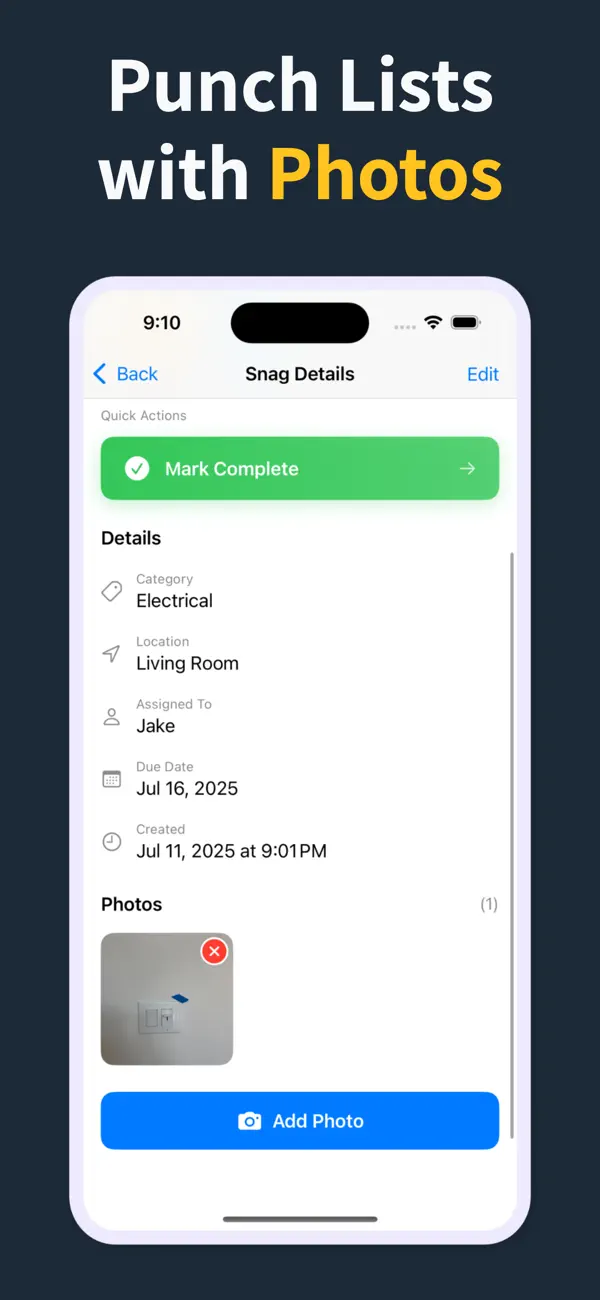
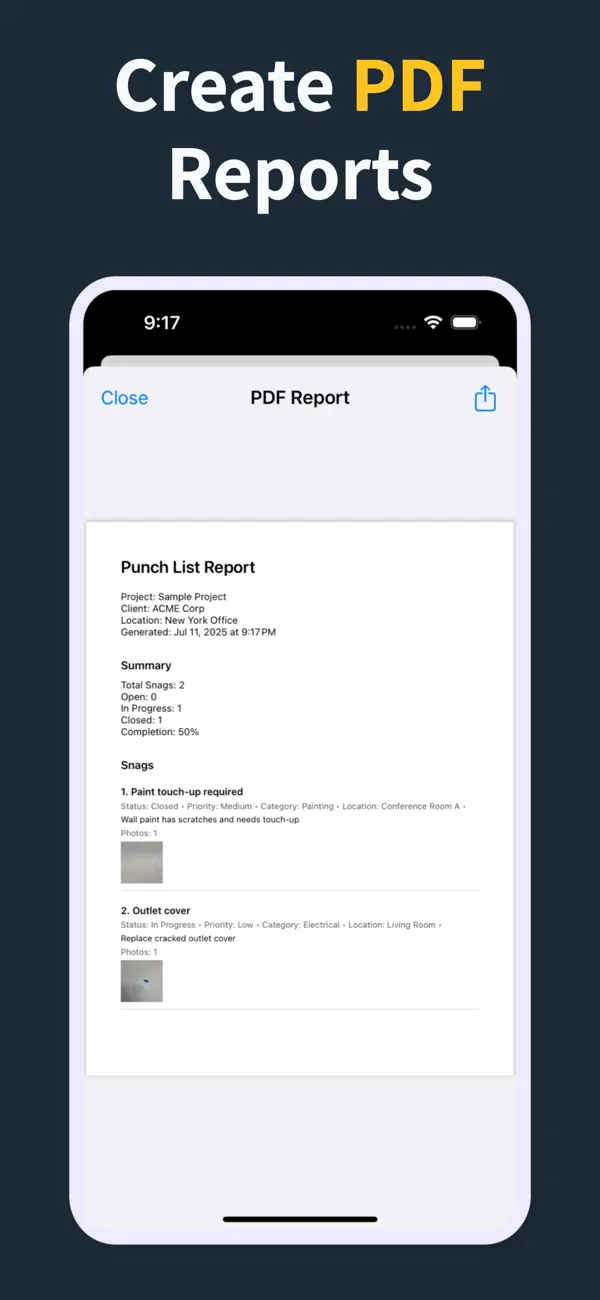
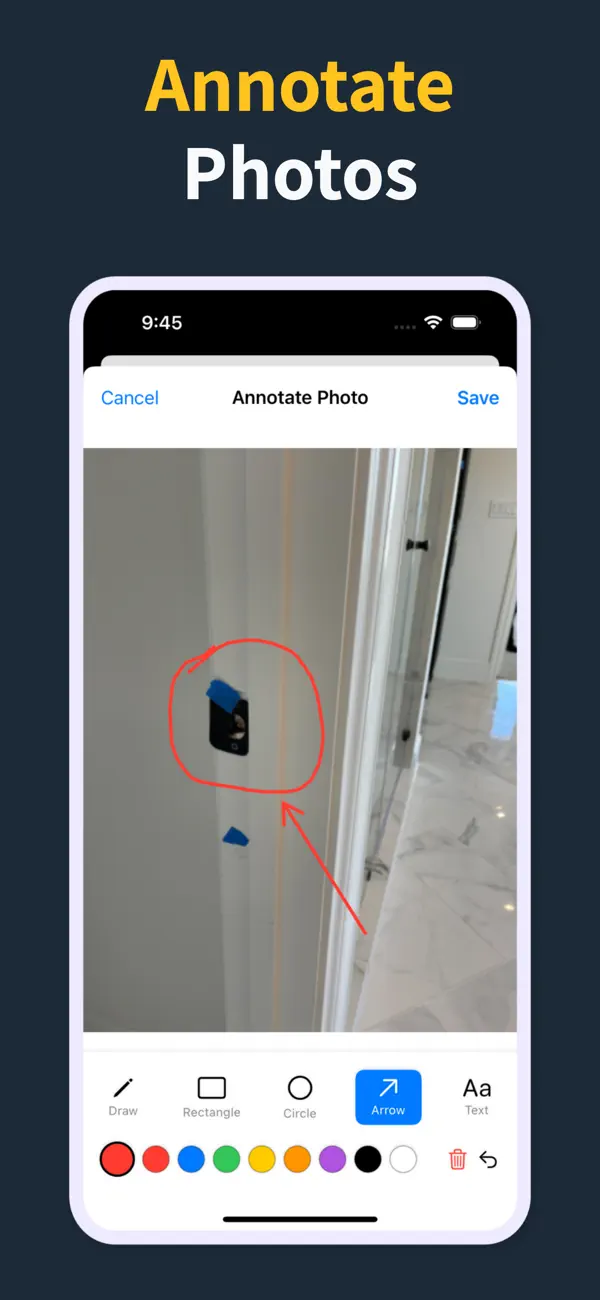
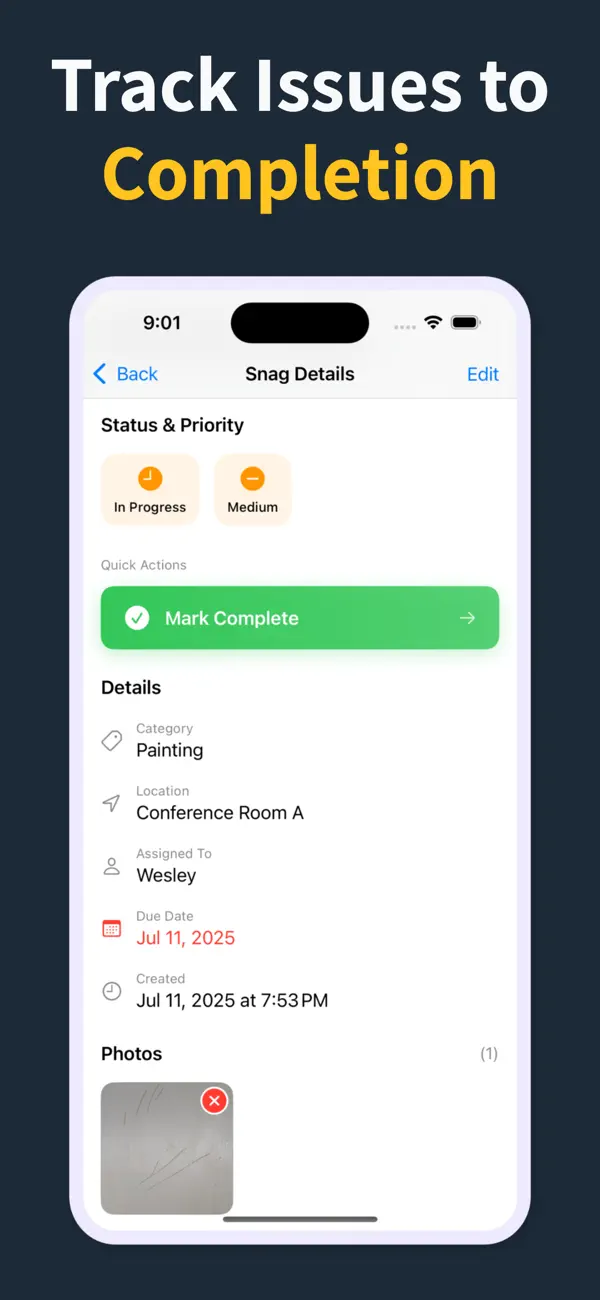
Attach an annotated photo and a timestamp to every item, and issue dated PDF reports after each walkthrough. Visual evidence beats memory and cuts disputes sharply, especially on fast-moving multi-trade projects.
Who should attend the deficiency walkthrough?
At minimum the general contractor and the owner or their representative; often the architect attends too. Subcontractors usually come for trade-specific walkthroughs once the initial list has been recorded.
How do I close out deficiencies efficiently?
Group items by trade in the report so each sub sees their full scope. Require a photo when an item is marked resolved, and re-walk the space before final sign-off to confirm nothing regressed.
Should I share the deficiency list with subcontractors?
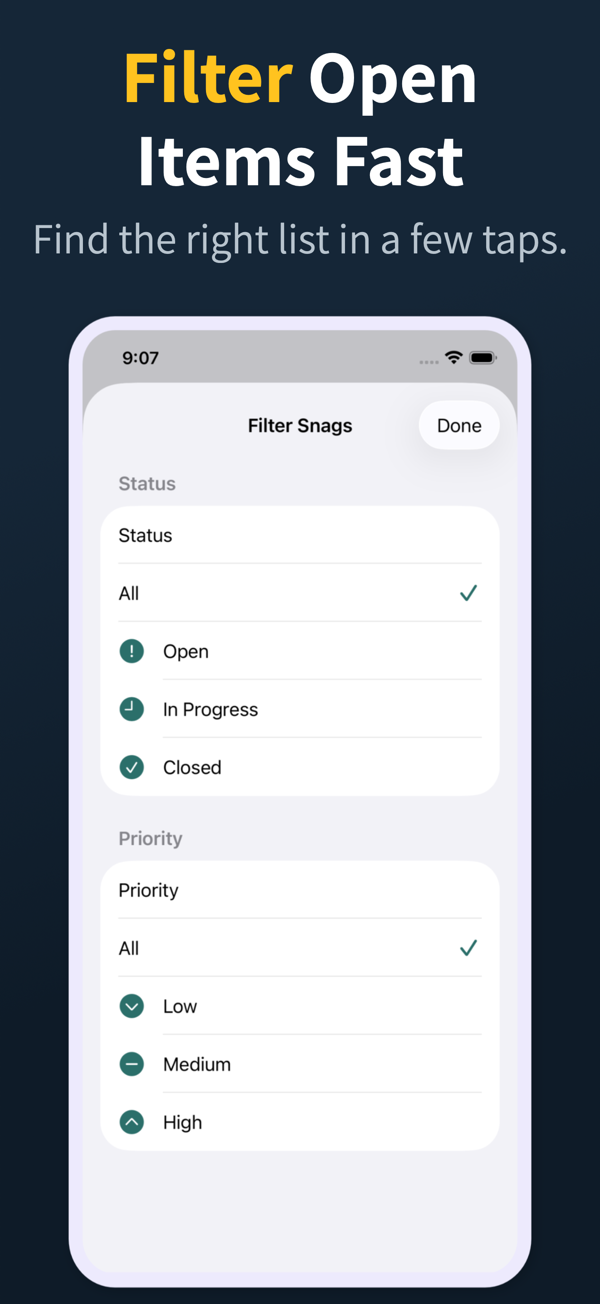
Yes. A filtered PDF showing only their scope makes it easy for subcontractors to plan return visits and close items on time, without wading through a list cluttered with other trades' work.